

This post may contain affiliate links. Please read our disclosure policy.
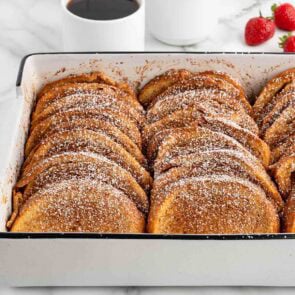
This baked french toast is the recipe I pull out when I want a special morning without the morning stress. You put it together the night before, it chills overnight, and the next day you slide it into the oven while the coffee is still brewing.
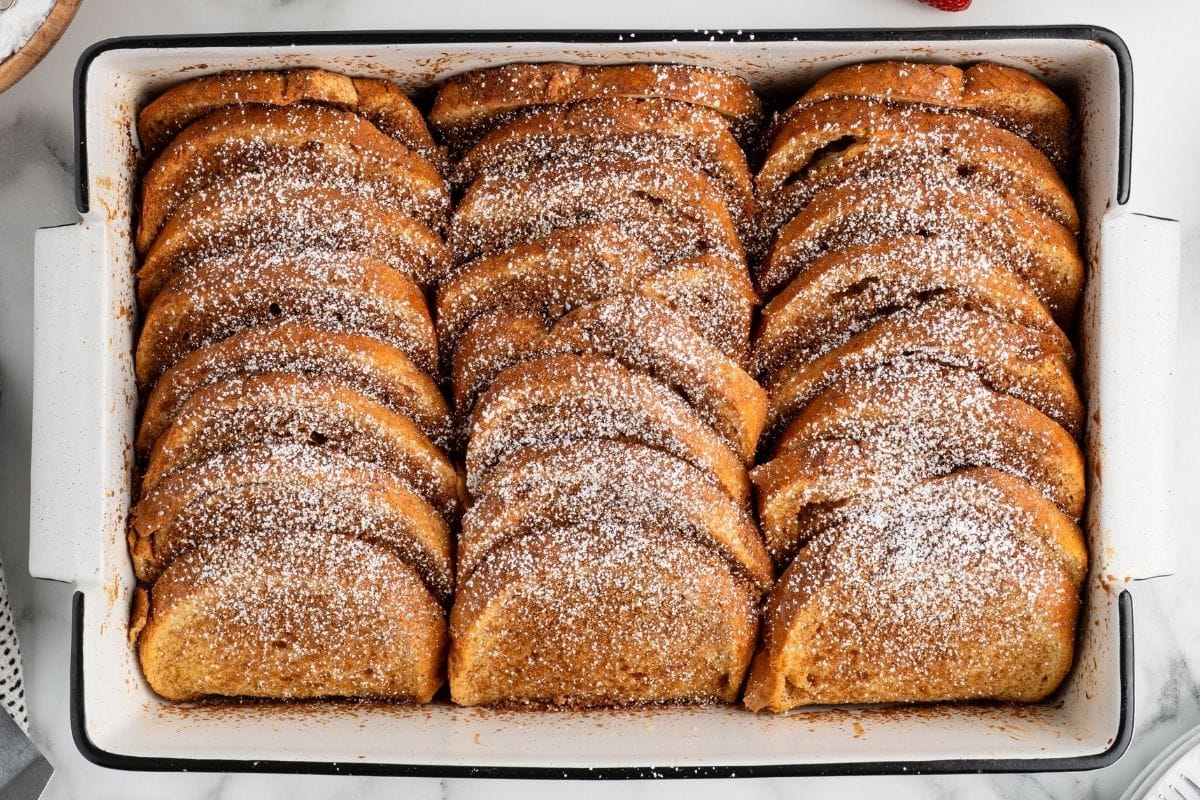
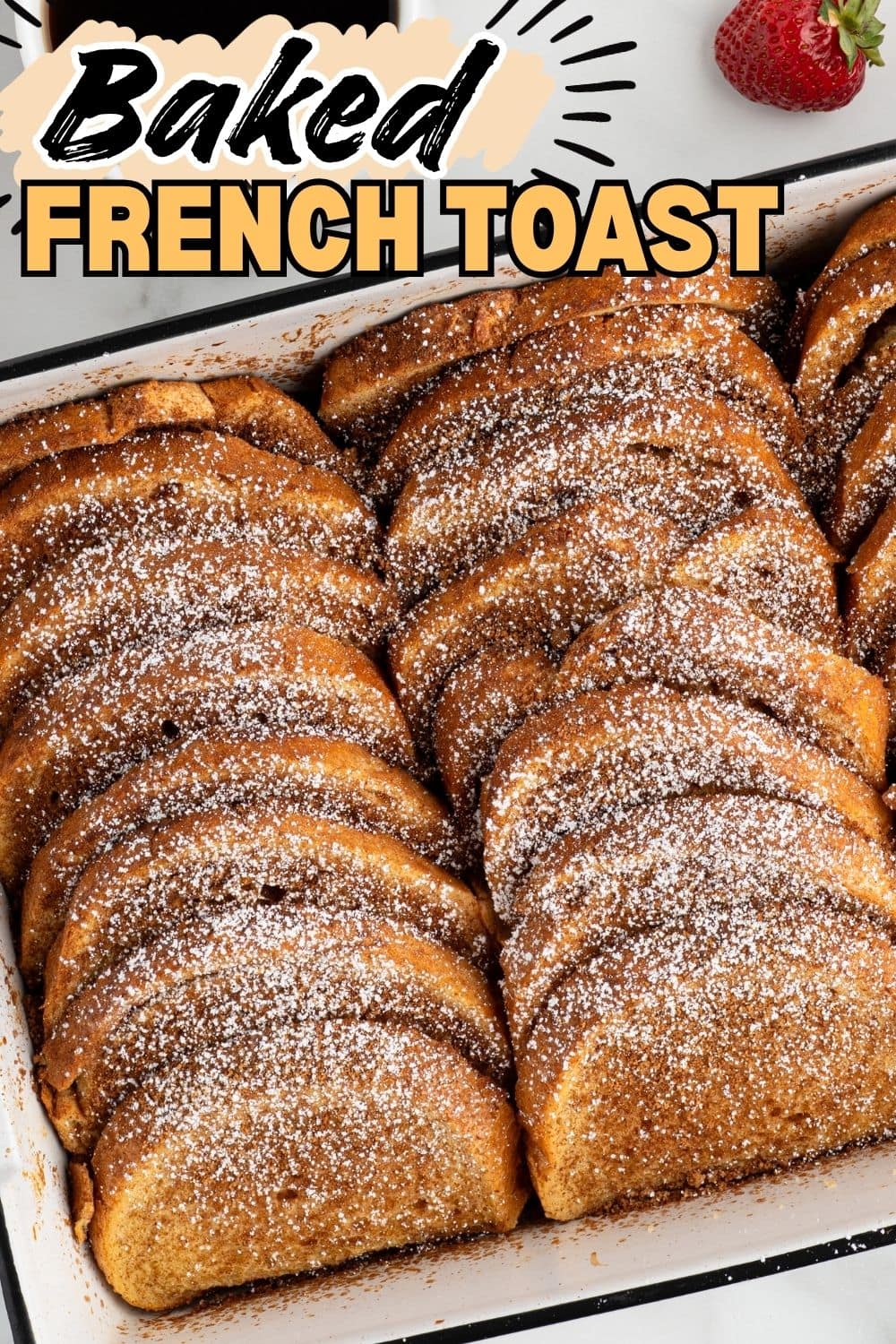
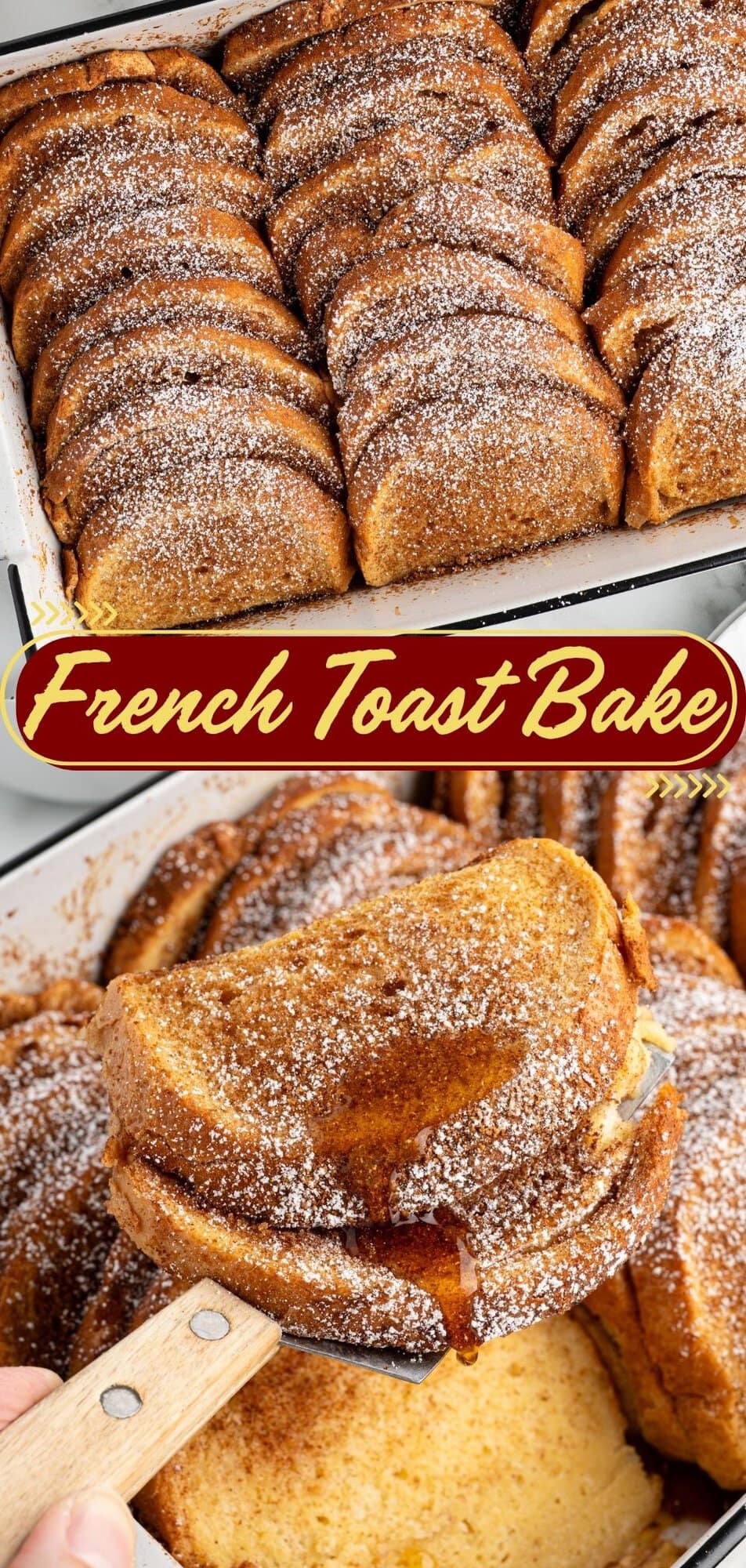
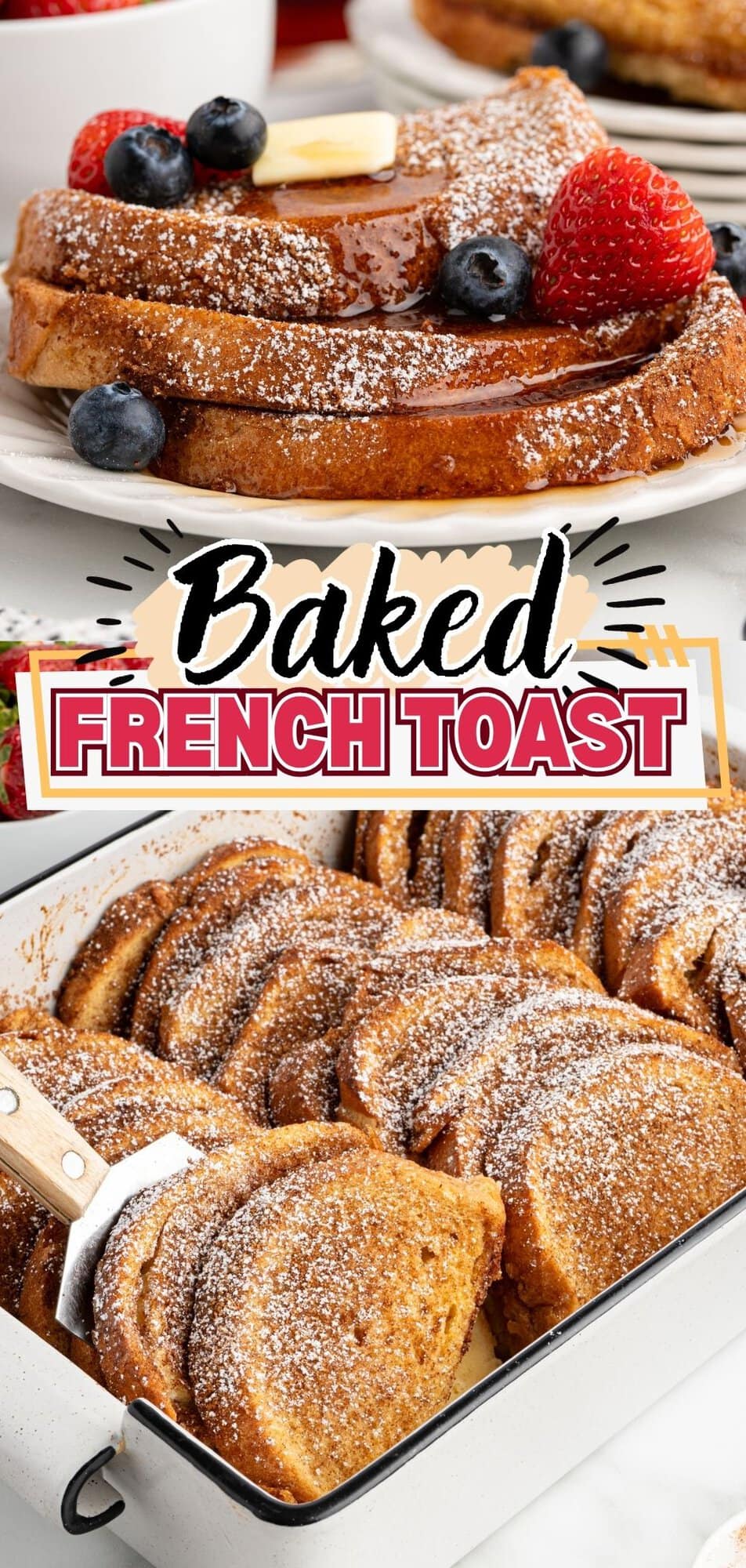
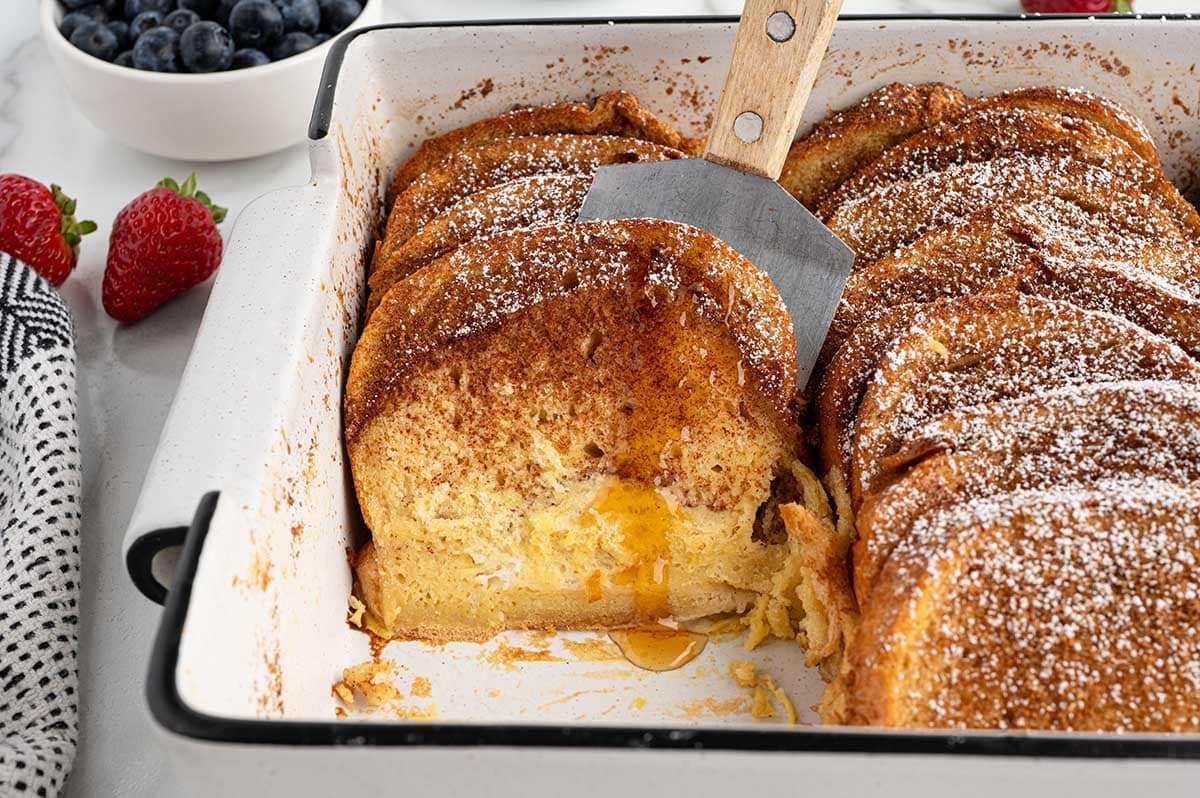
My aunt used to bring this to every holiday, and when she passed down the recipe to me, it became my job to keep it going. I’ve made it more Mother’s Days, Christmas mornings, Easter brunches, and family get-togethers than I can count, and at this point, no one lets me show up without it. That soft, custard-like center, lightly browned edges, and slices that hold together in clean, whole pieces are what everyone is there for.
What sets this version apart from most baked French toast recipes is two things you don’t want to skip. The first is letting the sliced bread sit out for 30 to 60 minutes before you dip it. Most recipes skip this step entirely, and it’s the biggest reason home cooks end up with soggy results.
The second is the two-stage bake: covered with foil for the first 20 minutes, then uncovered for the last 25 to 30 minutes. That combination gives you a cooked-through center and a lightly golden top without drying it out.
If you love easy make-ahead brunch recipes, my French Toast Casserole is a reader favorite with a different twist, and my Sheet Pan Eggs make the perfect eggs for a crowd and are worth bookmarking too. For Thanksgiving and Christmas morning I reach for my overnight pumpkin French toast casserole, which takes a whole can of pumpkin and a pecan streusel on top.
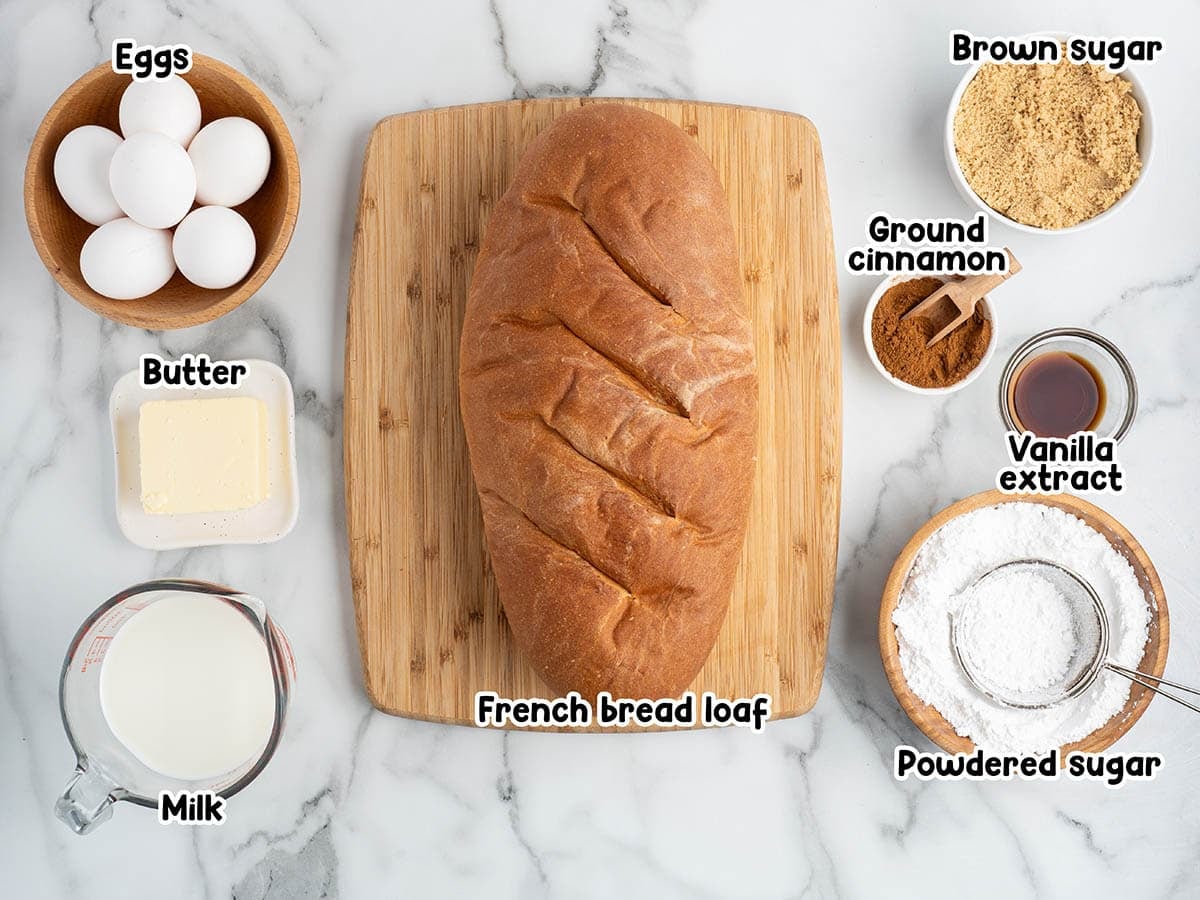
Key Ingredients
- French bread loaf. The bread type is the most important call you’ll make with this recipe. You want a dense, bakery-style French bread loaf, not a baguette; the wider, shorter loaf fills the 9×13 pan in 3 neat rows and holds up to overnight soaking without falling apart. Slice it between 1/2 and 3/4 inch thick, because too thin and it falls apart and too thick and the center won’t cook through.
- Whole milk. Use whole milk, not low-fat or skim. The fat content is what makes the custard creamy rather than rubbery when it bakes through. It’s a simple choice that makes a real difference in the finished texture.
- Large eggs. Six eggs go into the custard for a full 9×13 pan. I use a blender because 10 to 15 seconds on high gives you a smooth, streak-free mix that soaks evenly into every slice. If you’re hand whisking, make sure the eggs are fully broken down before you start dipping.
- Light brown sugar, divided. This ingredient is doing two different jobs, which is why the amount is split. Three quarters cup goes into the custard for sweetness, and the remaining half cup gets mixed with cinnamon and sprinkled over the top of the bread before it goes in the fridge. Keep them separate.
- Ground cinnamon. The cinnamon goes in the topping only, not the custard. Combined with the brown sugar topping, it bakes into a lightly caramelized crust when the foil comes off in the final stage. That’s what gives you the slightly sweet top layer everyone goes back for.
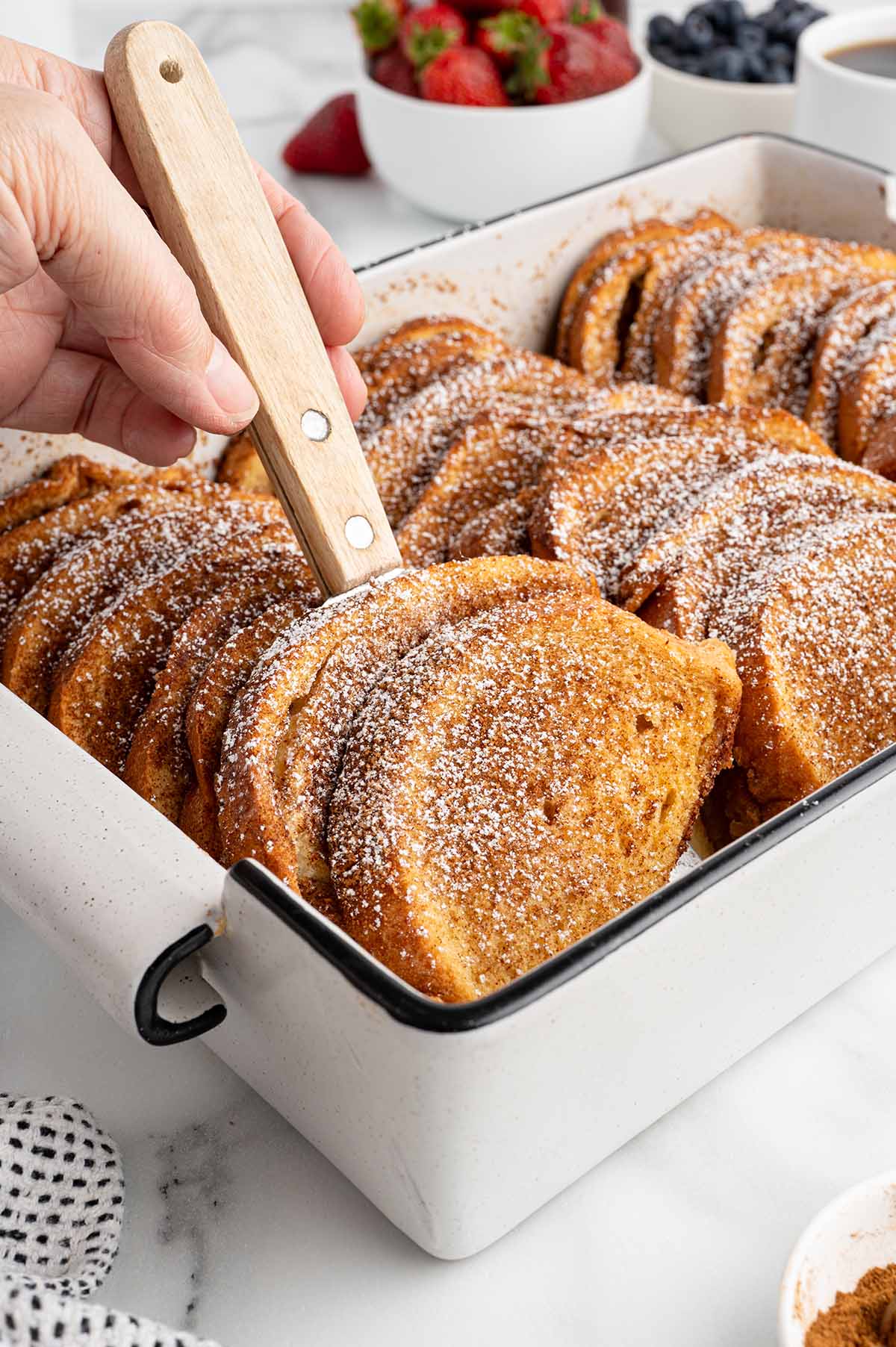
How to Make Baked French Toast
Step 1: Dry the bread. Lay your bread slices out in a single layer on a clean counter or cutting board and let them sit for 30 to 60 minutes. This is the step most people skip, and it’s the reason baked french toast ends up soggy. Drier bread absorbs the custard evenly and holds together when it bakes.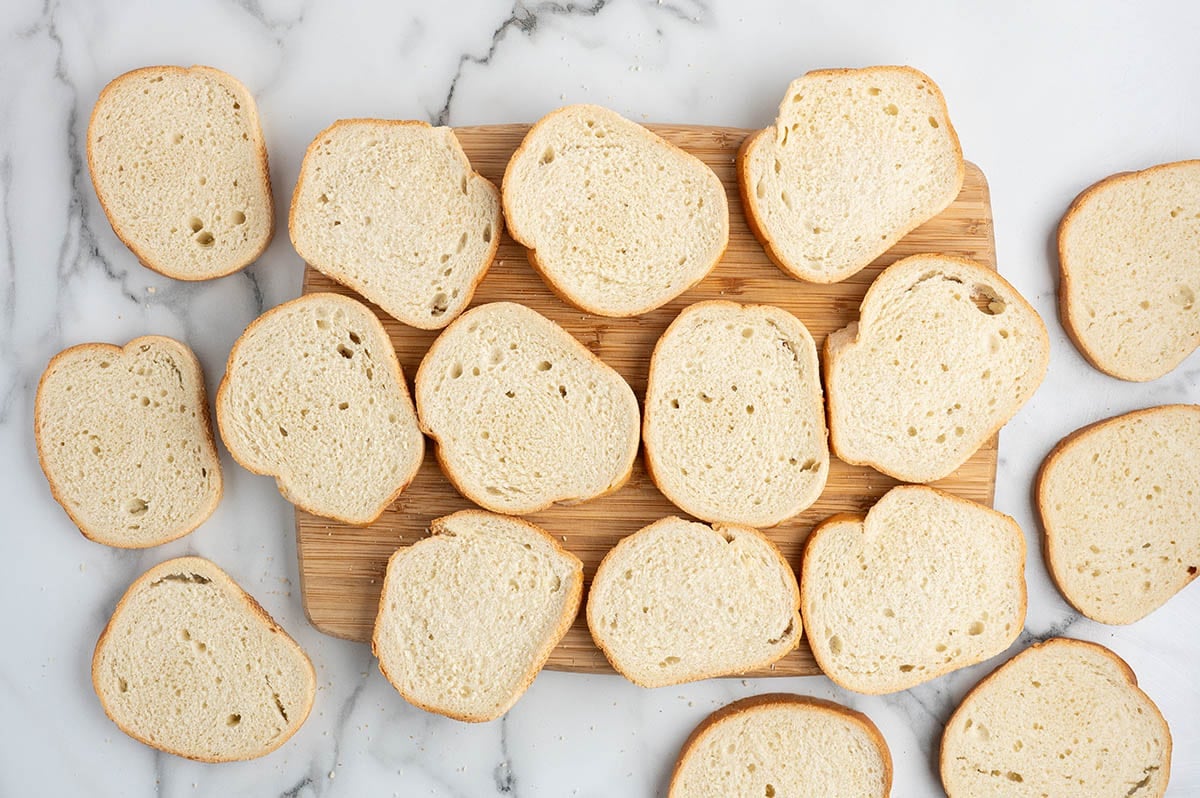
Step 2: Prep the dish and make the custard. Generously butter a 9×13-inch baking dish and set it aside. Add 1 1/2 cups whole milk, 6 large eggs, 3/4 cup packed light brown sugar, and 2 teaspoons vanilla extract to a blender and blend on high for 10 to 15 seconds until smooth. Transfer to a shallow bowl wide enough to dip the bread.
Step 3: Dip the bread and fill the pan. Dip each slice into the custard, letting all sides coat and the center absorb. Let the excess drip off, then place each slice into the buttered dish in a stacked layer, building 3 rows of about 6 slices.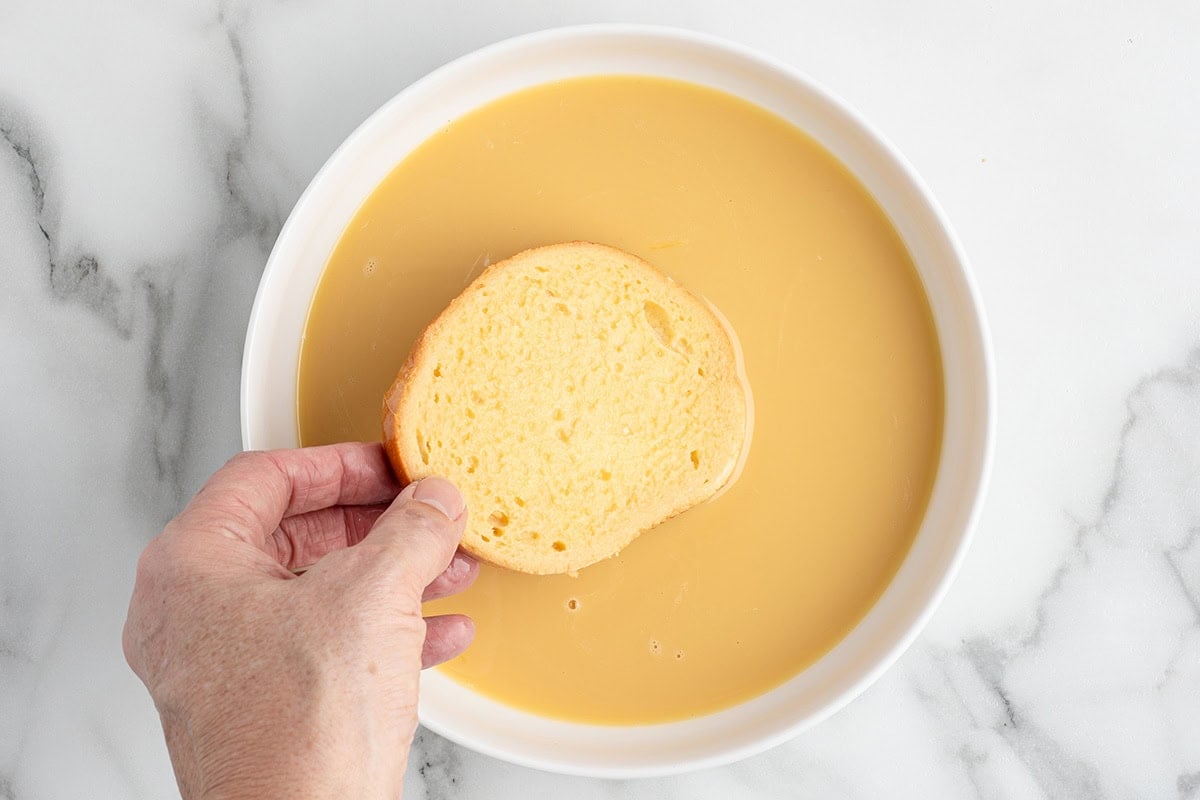
Step 4: Pour the remaining custard. Once all the slices are in, pour any remaining custard evenly over the top.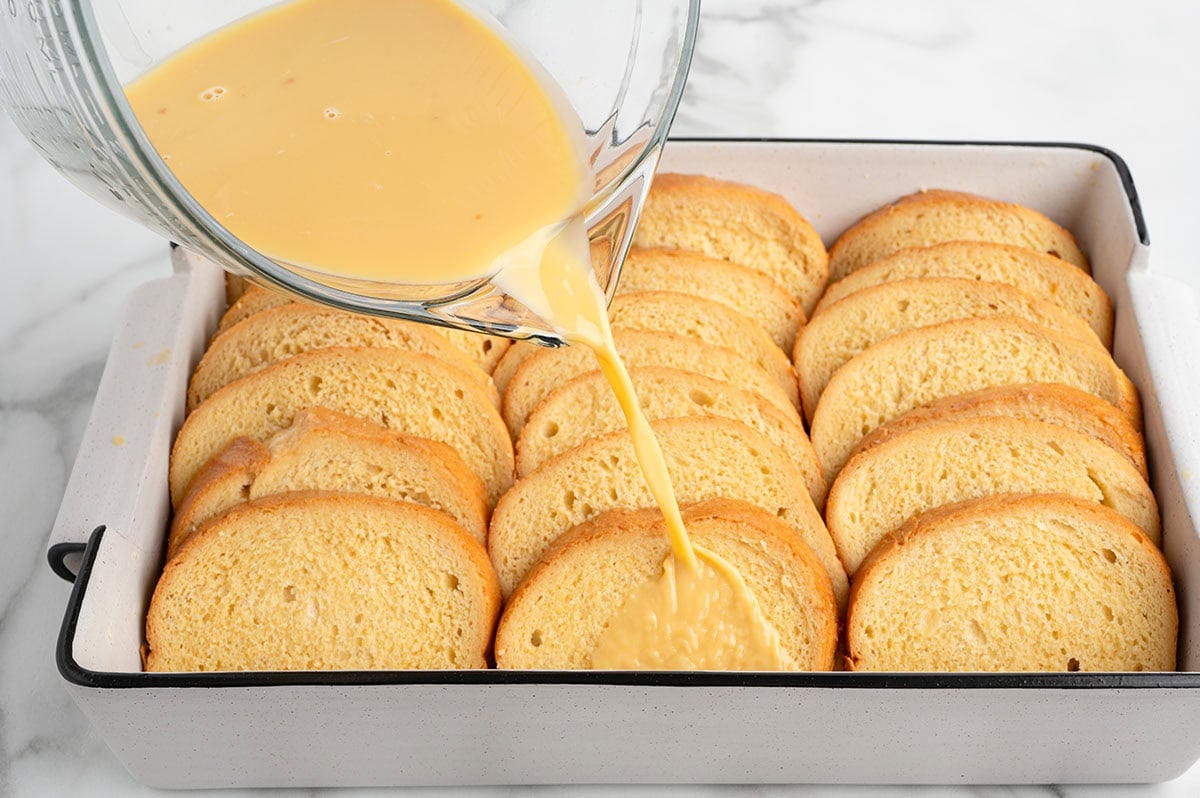
Step 5: Add the topping and refrigerate. Stir together the remaining 1/2 cup packed brown sugar and 1 tablespoon ground cinnamon in a small bowl, then sprinkle it evenly over the entire surface of the bread. Cover the dish tightly and refrigerate for at least 8 hours or overnight.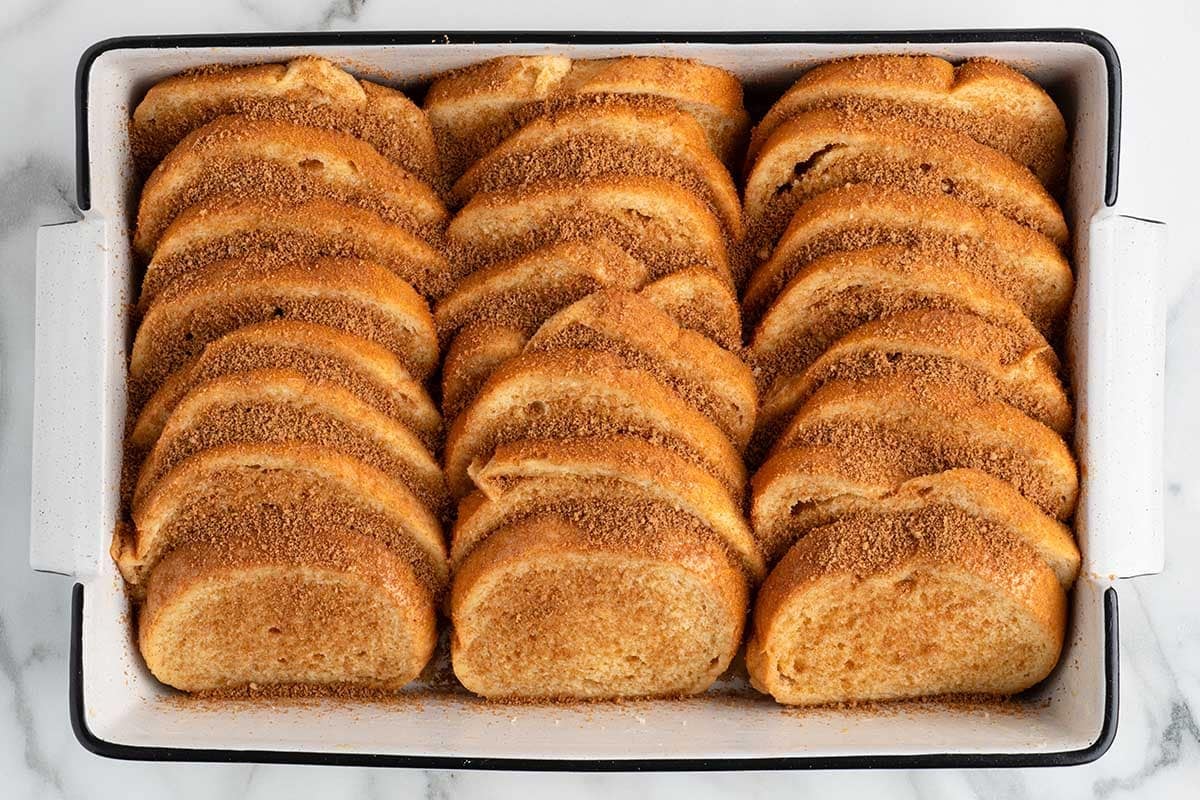
Step 6: Bring to room temperature and prep the oven. Pull the dish from the refrigerator and let it sit at room temperature for 15 to 20 minutes. If any custard has pooled at the bottom and the bread has not fully absorbed it, spoon it over the top of the slices before you cover and bake. Preheat the oven to 350°F. If you covered the dish with plastic wrap, swap it out for a sheet of aluminum foil and seal the edges tightly.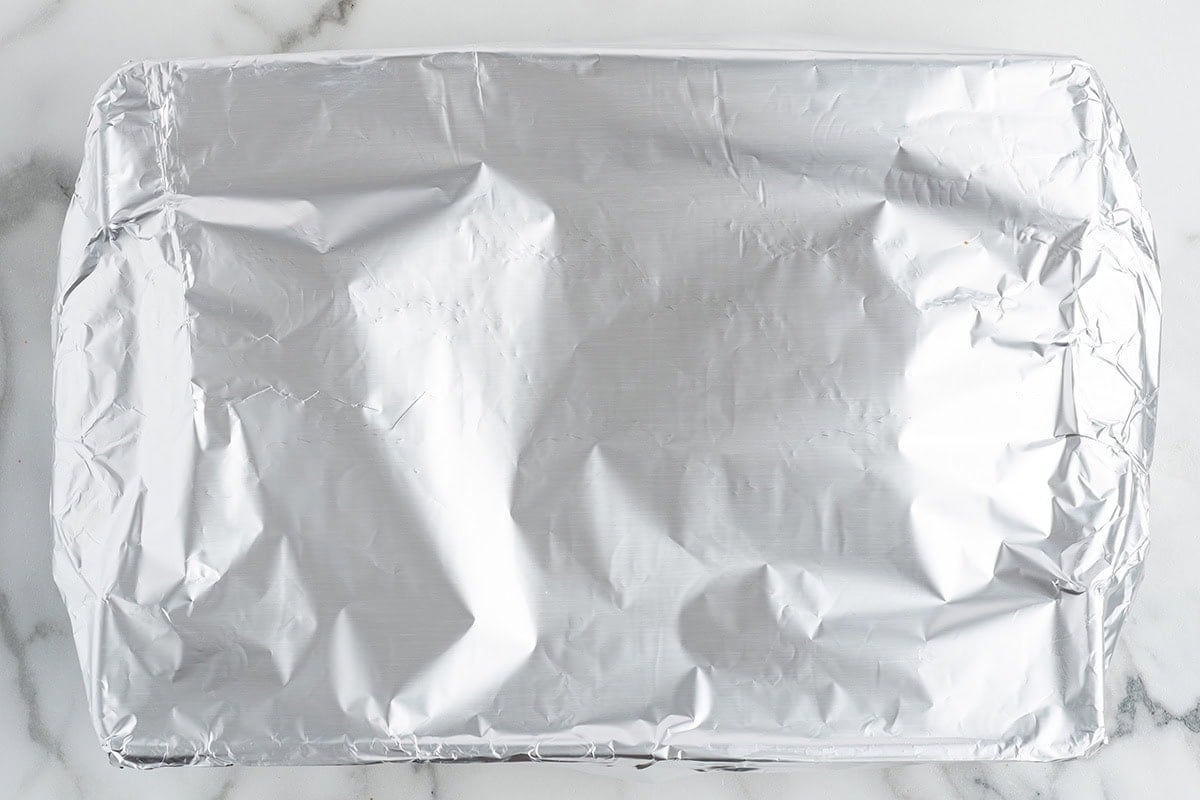
Step 7: Bake. Bake covered with foil for 20 minutes, then remove the foil and bake for another 25 to 30 minutes until the top is lightly browned and a toothpick inserted in the center comes out clean. If you’d rather have a soft top with no browning, leave the foil on for the full bake time.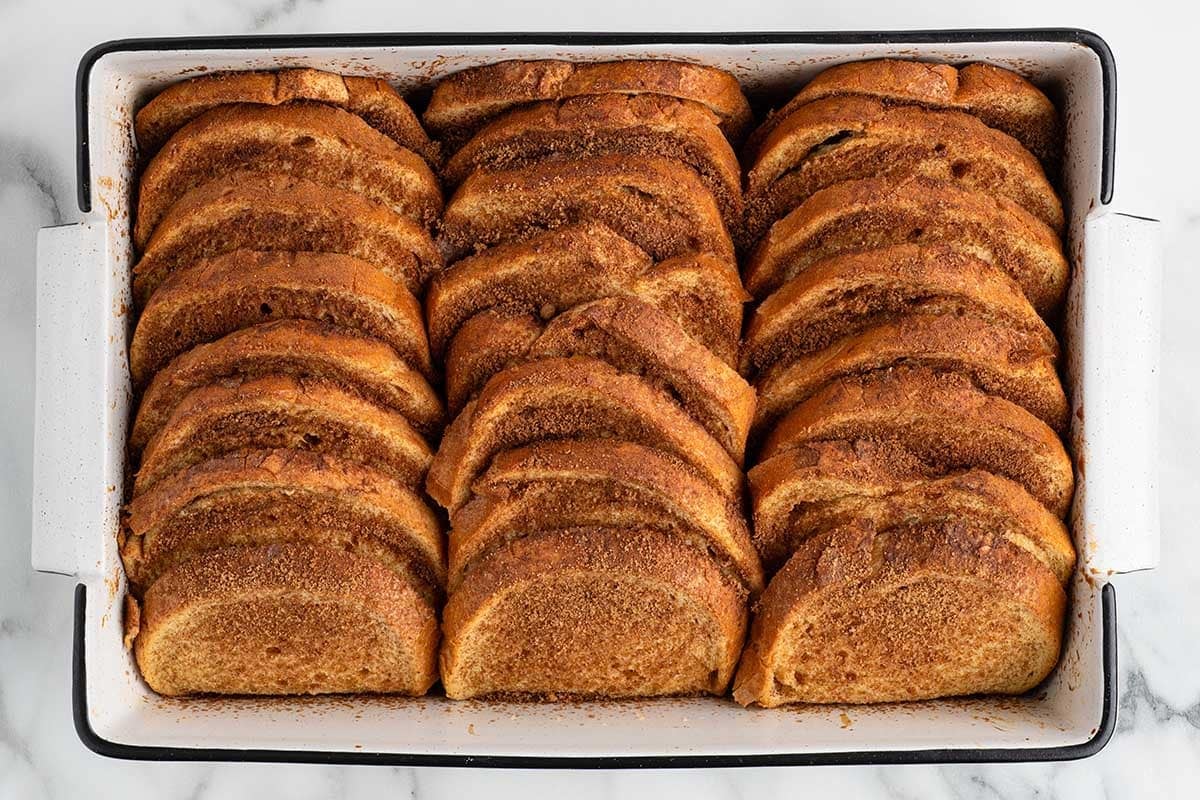
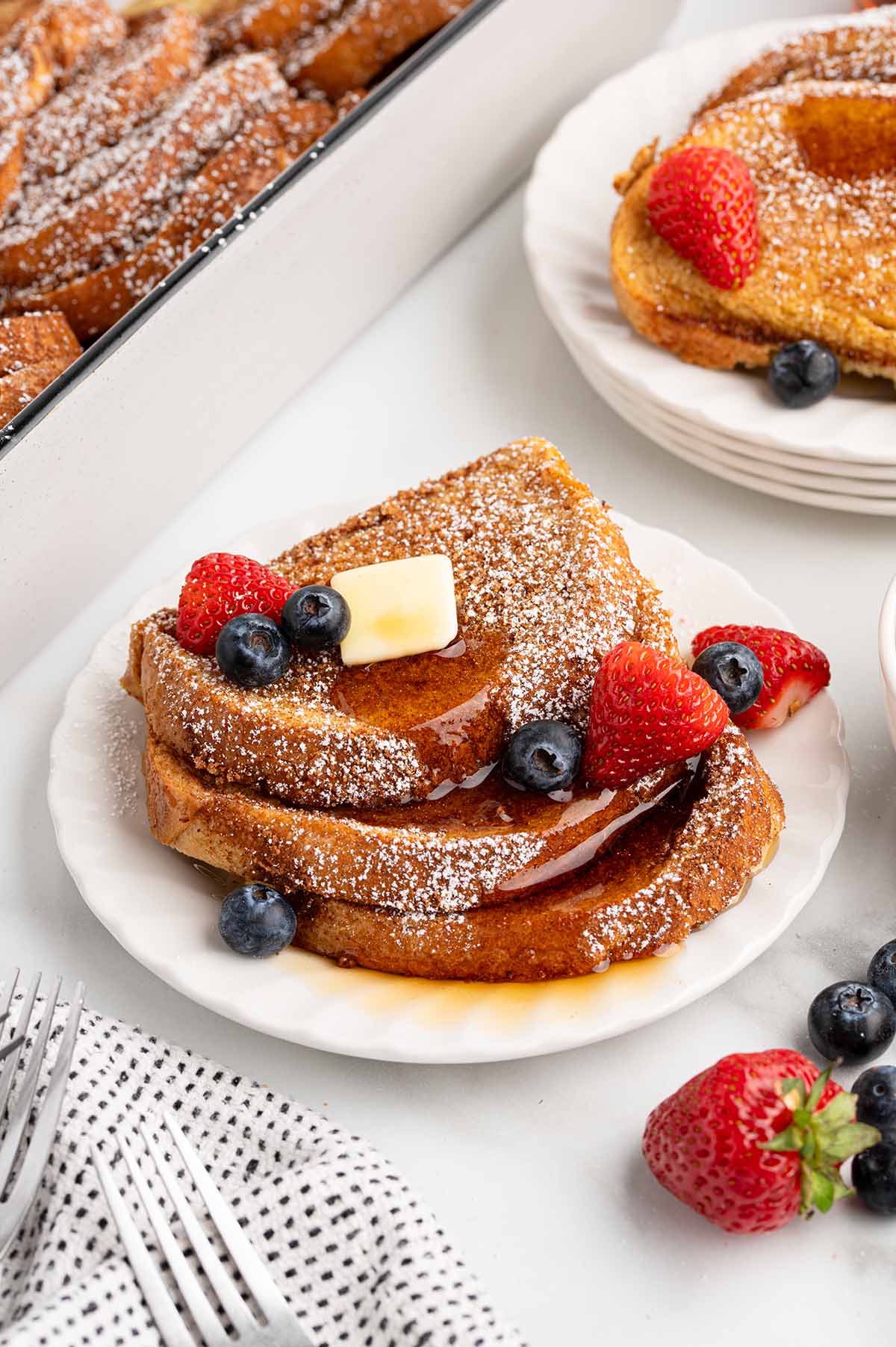
Step 8: Cool and serve. Let the dish cool for 5 to 8 minutes before serving. Dust lightly with sifted powdered sugar right before you bring it to the table.
How to Store Baked French Toast
Refrigerator: Store leftover baked french toast in an airtight container in the refrigerator for up to 3 days. To reheat, place the slices in a 325°F preheated oven for 15 to 20 minutes until warmed through.
Frequently Asked Questions
Yes, and the recipe is designed for it. Assemble the whole dish the night before, cover it, and refrigerate for at least 8 hours or overnight. The next morning, pull it out, let it warm up for 15 to 20 minutes, and bake.
Almost always, it comes down to the bread. Fresh bread is too moist to absorb the custard evenly and tends to turn soft and mushy during baking. Let your sliced bread sit out for 30 to 60 minutes before dipping, and make sure the dish refrigerates for the full 8 hours minimum.
A dense French bread loaf is what this recipe calls for. You want the wider, shorter bakery-style loaf, not a thin baguette. Baguette slices are too small to fill the pan properly and don’t hold together the same way.
You need a minimum of 8 hours. Shorter than that and the custard won’t have time to absorb fully into the bread, which means uneven texture when it bakes. The longer it chills, the better the result.
Yes, keeping the foil on for the full bake time gives you a soft top with no browning, and the interior still cooks through completely. Remove the foil for the last 25 to 30 minutes only if you want the lightly golden crust on top.
More Breakfast Recipes You’ll Love
Easy Baked French Toast
Ingredients
- 1 pound French bread loaf cut into ½-¾-inch slices
- 2-3 tablespoons unsalted butter (to grease the baking dish)
- 1½ cups whole milk
- 6 large eggs
- 2 teaspoons vanilla extract
- 1¼ cups light brown sugar packed, divided (¾ cup mixed with the eggs and ½ cup for the cinnamon sugar topping)
- 1 tablespoon ground cinnamon
Optional garnish
- Powdered sugar sifted
Instructions
- Place the bread slices out onto a clean counter, or cutting board, in a single layer allowing them to dry out for about 30-60 minutes. The drier bread will hold up better when dipped in the egg mixture.1 pound French bread loaf
- Generously grease a 9×13-inch baking dish with the unsalted butter and set aside.2-3 tablespoons unsalted butter
- To a standard blender add the milk, eggs, ¾ cup brown sugar, and vanilla. Blend on high for 10-15 seconds or just until smooth. Transfer the mixture to a shallow dish or bowl.1½ cups whole milk, 6 large eggs, 0.75 cups light-brown sugar, 2 teaspoons vanilla extract
- Dip the sliced bread into the egg mixture allowing all sides to become fully coated and the center of the bread to absorb the mixture. Remove, allowing any excess egg mixture to drip back into the dish, and place into the prepared baking dish in a stacked layer. Repeat until all the slices have been dipped and stacked in the baking dish. You should end up with 3 rows of approximately 6 slices per row in your baking dish.
- Pour the remaining egg mixture (after all the slices have been dipped) evenly over the rows of bread in the baking dish.
- Stir together in a small bowl the remaining ½ cup brown sugar and cinnamon. Sprinkle evenly over the entire top surface of the french toast.0.5 cups light-brown sugar, 1 tablespoon ground cinnamon
- Tightly cover the dish with plastic wrap or aluminum foil and refrigerate for a minimum of 8 hours or up to overnight. This will allow the bread to soak up the excess egg mixture.
- Remove the baking dish from the refrigerator and allow the french toast to sit at room temperature for 15-20 minutes to remove the chill so it bakes evenly.
- Preheat the oven to 350°F. If your dish was covered with plastic wrap, remove it and replace with aluminum foil tightly sealing the edges.
- Bake for 20 minutes, tightly covered with foil, remove the foil and continue baking for the remaining 25-30 minutes or until lightly browned and a toothpick inserted into the center comes out clean. For a soft crust (not crisp and golden) you can keep the foil on the french toast for the entire bake time.
- Allow the baked french toast to cool in the dish for 5-8 minutes before lightly dusting with powdered sugar and serving.Powdered sugar
Jenn’s Notes
- No blender? No problem, just whisk your egg mixture in a shallow bowl or dish. The key is to whisk really vigorously so the eggs are fully broken up and everything comes together into a smooth, well-blended mixture.
- After refrigerating, if your bread hasn’t soaked up all of the egg mixture, simply spoon the remaining liquid over the top of the slices before covering with foil and popping them in the oven.
- The more time you give the french toast to sit in the fridge, the better! A longer rest means the bread has more time to soak up all that egg mixture, giving you a wonderfully even texture once it’s baked.








Easy to prepare and it disappeared before I got to try it. It was quite custardy
I have only texas toast type bread will that work as well
Yes, Texas toast should work well! Since the slices are thicker, they may need a little extra time to soak up the egg mixture, but otherwise you can follow the recipe as written.
Looks delicious!! I can hardly wait to try the recipe!!
This is a very good recipe for French Toast. Definitely would recommend it!
Thank you! Glad you enjoyed it! It is a favorite in our house!